
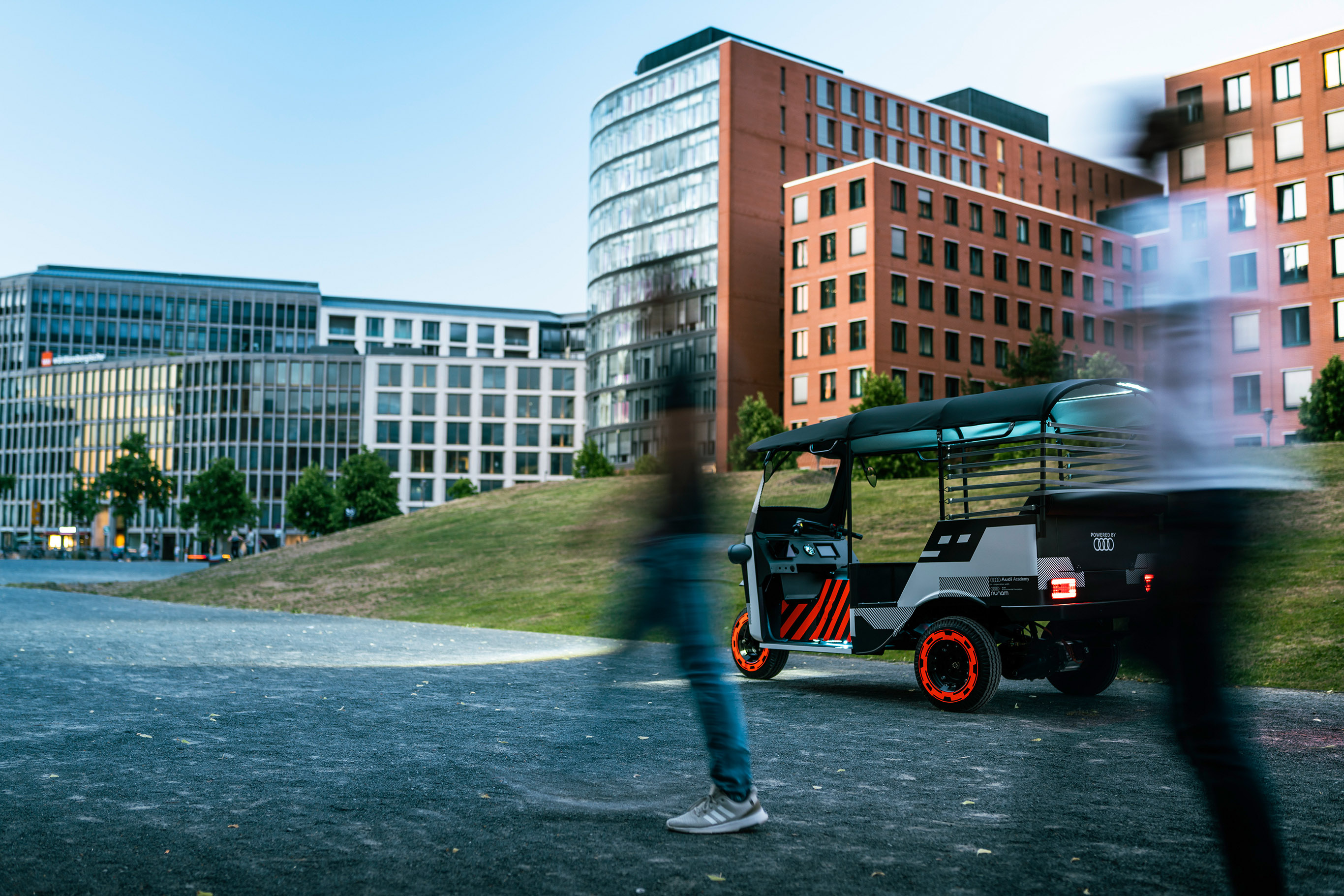
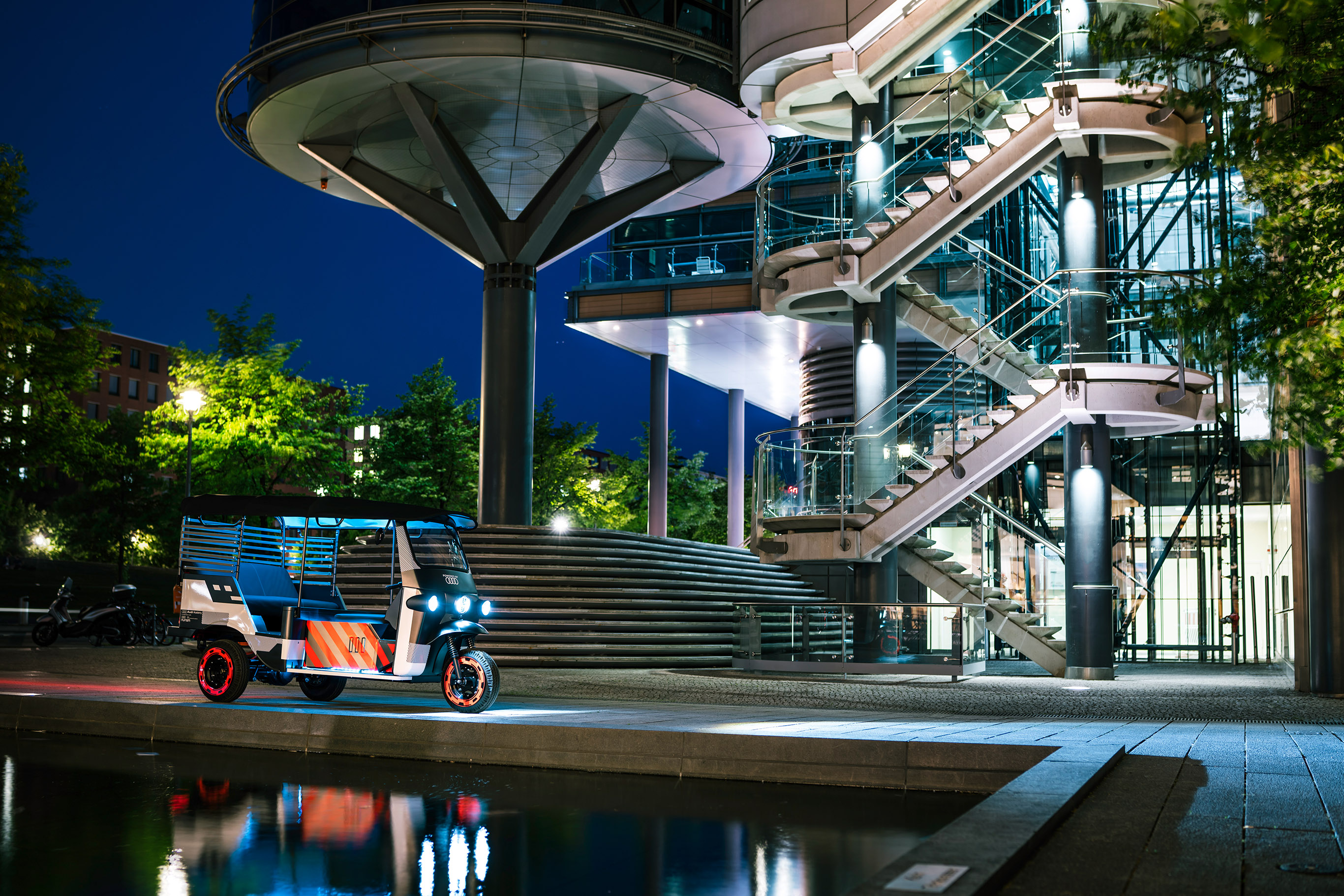
A second life for electric car batteries: The German-Indian start-up Nunam is bringing three electric rickshaws to India’s roads.
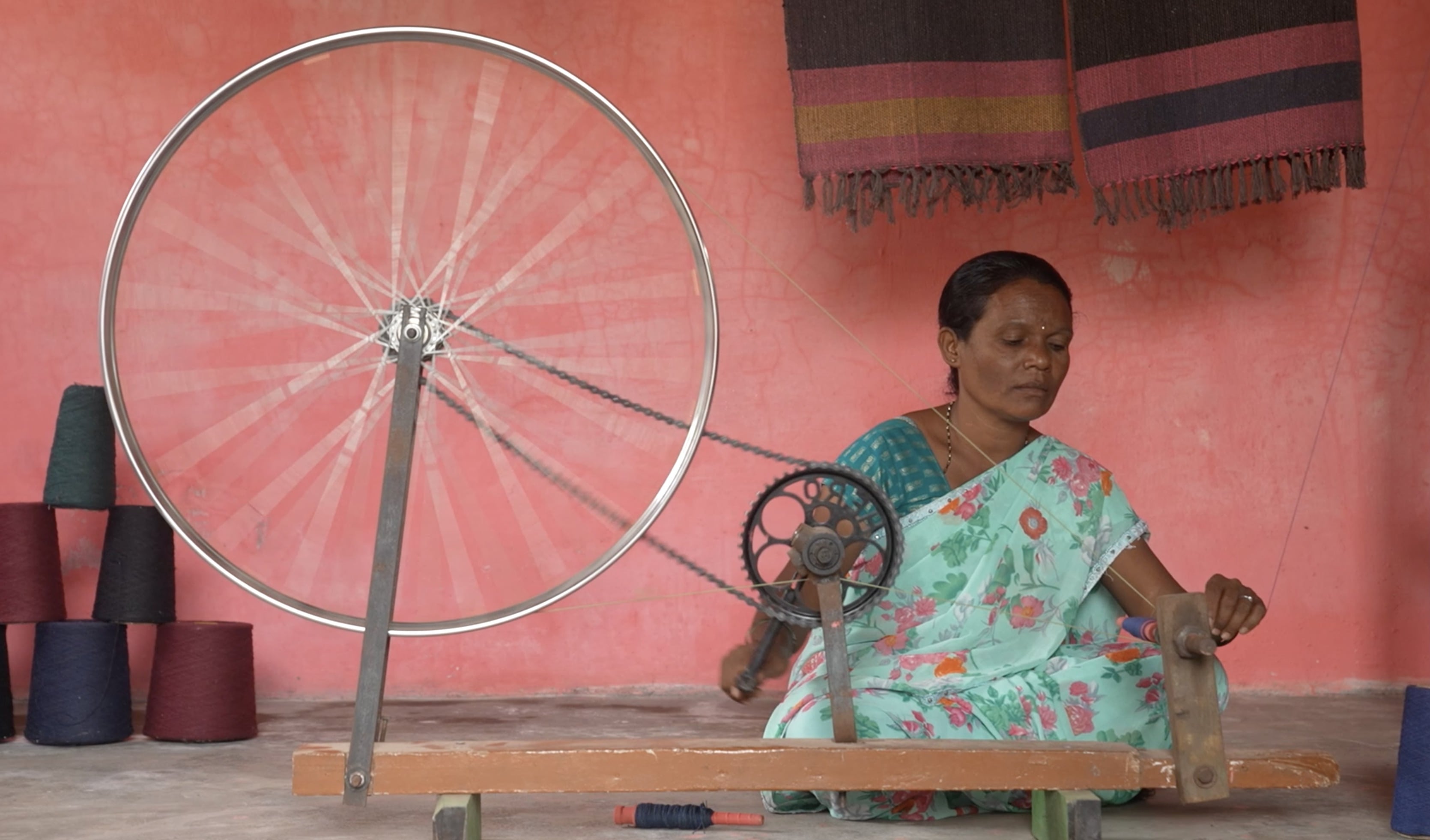
The e-rickshaws will be made available to a charitable organisation there. This gives women in particular the opportunity to travel to markets in an electrically powered rickshaw and sell their home-made goods without the need for middlemen. The e-rickshaw is powered by used battery modules that spent their first life in an Audi e-tron. This is because the old batteries are still extremely powerful. If they are used in the right applications, second-life batteries can have a huge impact and help people in challenging life situations to earn an income and achieve economic independence – in a sustainable way.
The eco-efficiency of an e-rickshaw is ideal for this. While the battery has a high energy density and the weight of the vehicle is comparatively low, the power of the electric motor does not need to be particularly high, as rickshaw drivers in India do not need to travel fast or far.
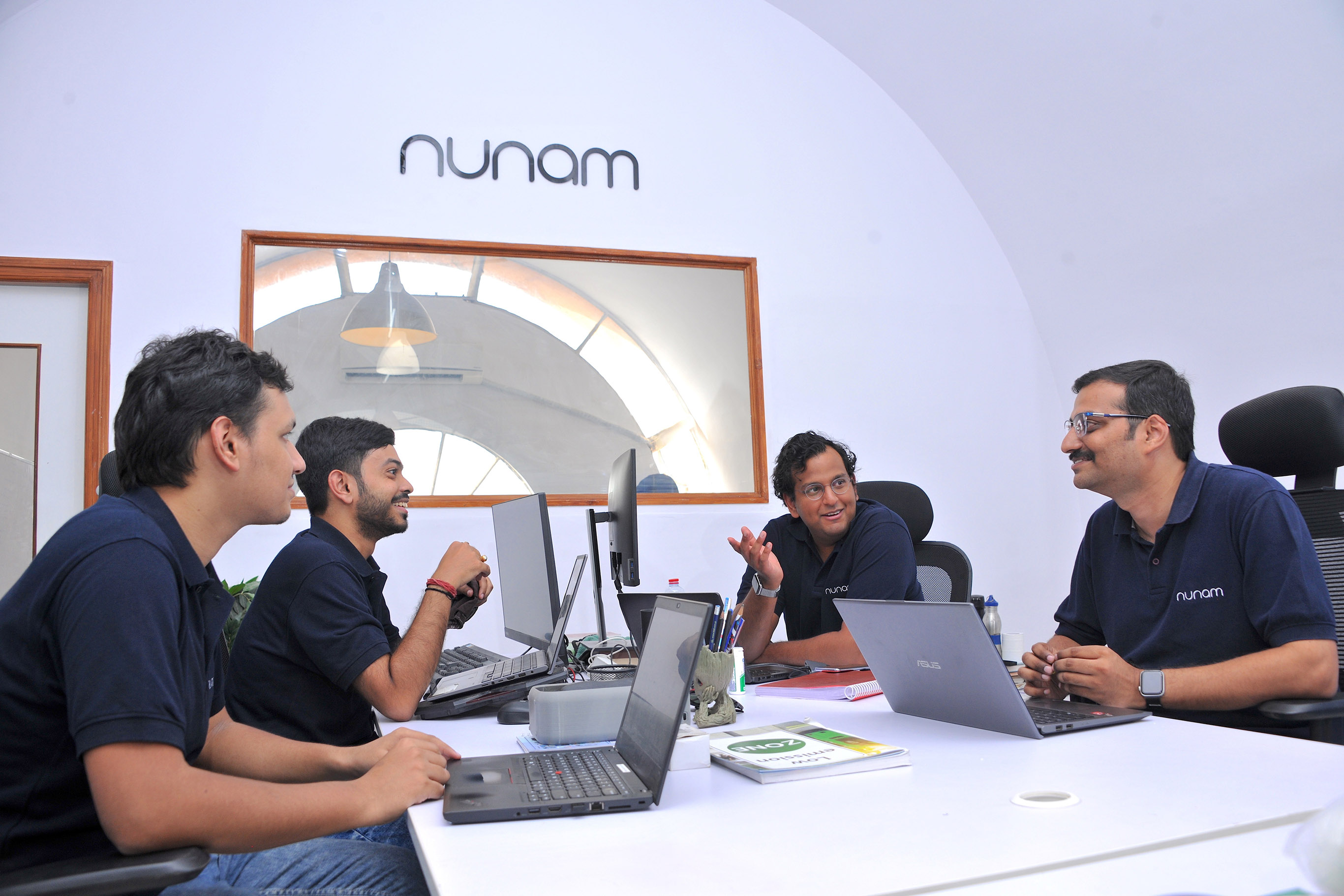
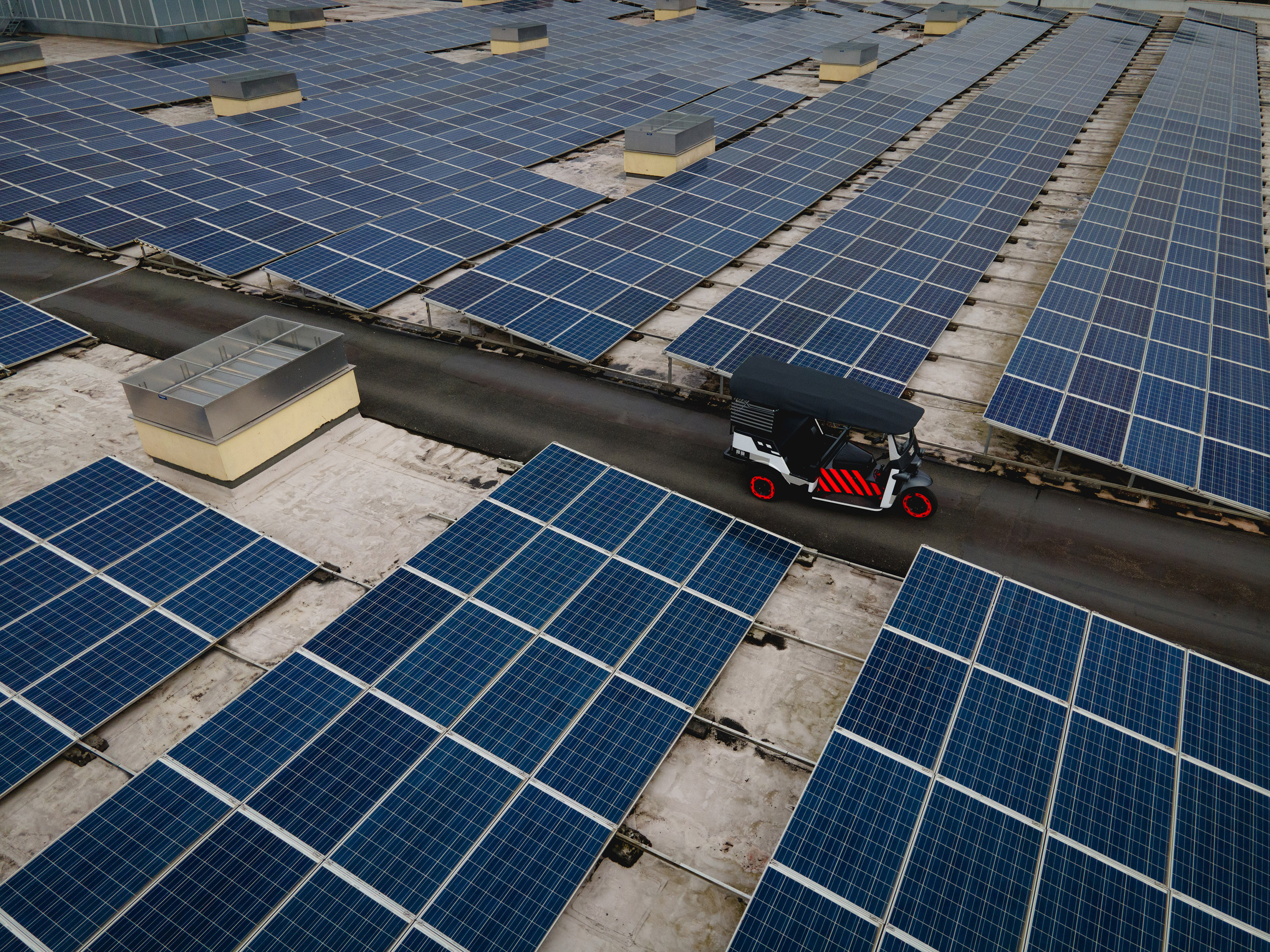
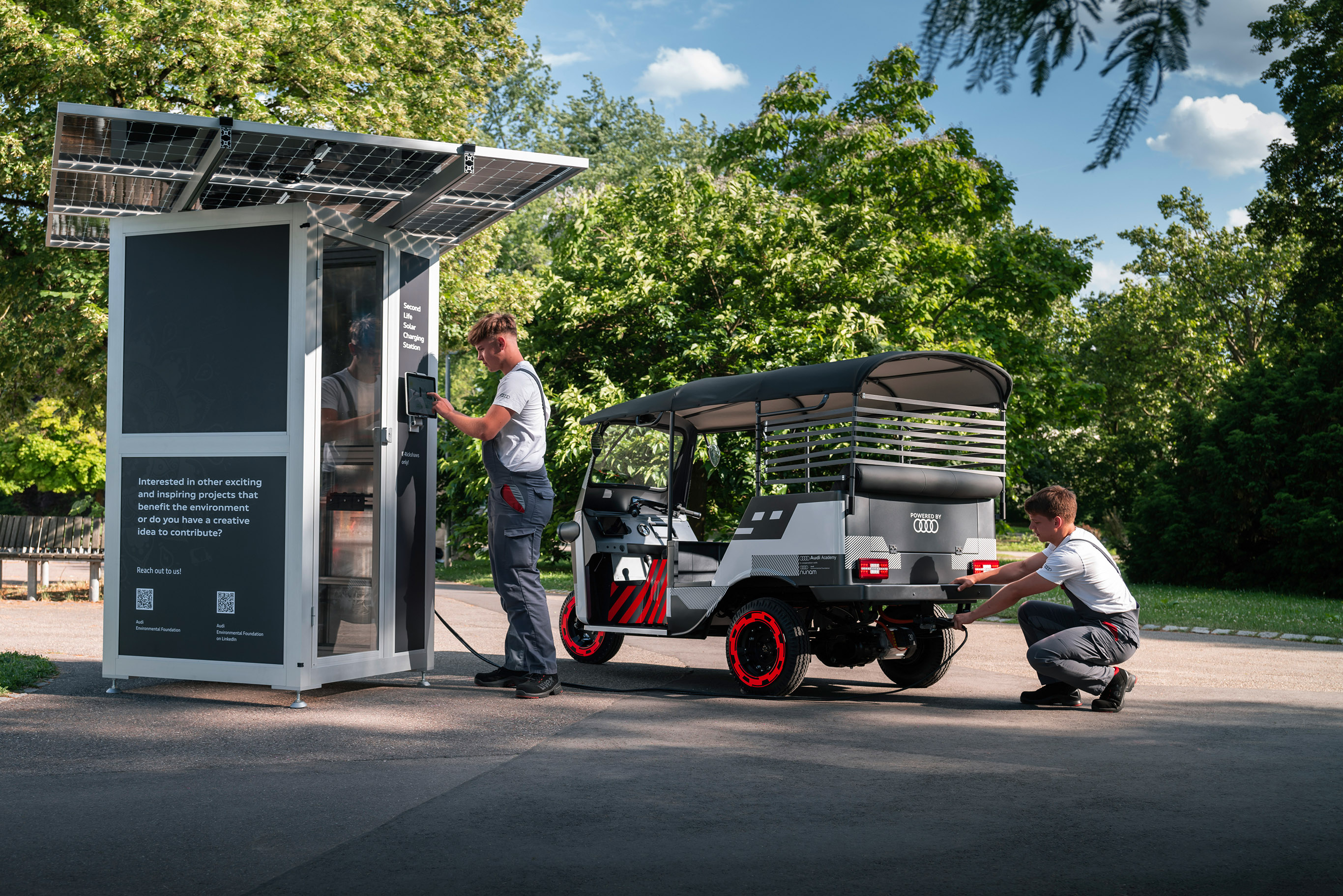
Electrically powered rickshaws are already not uncommon on the roads of the subcontinent. However, they often run on lead-acid batteries, which have a relatively short lifespan and are often not disposed of properly. At the same time, rickshaw drivers mainly charge their vehicles with electricity from the public grid, which in India has a high proportion of coal-fired power. Nunam also has a solution for this: the electricity that goes into the e-rickshaws comes from solar charging stations. The solar panels are located on the roofs of the local project partner. This means that the journey is largely free of local CO₂ emissions. The charging station is also an in-house development and the non-profit start-up based in Berlin and Bangalore is supported by the Audi Environmental Foundation. Nunam has developed prototypes in collaboration with the training team at the Audi site in Neckarsulm.
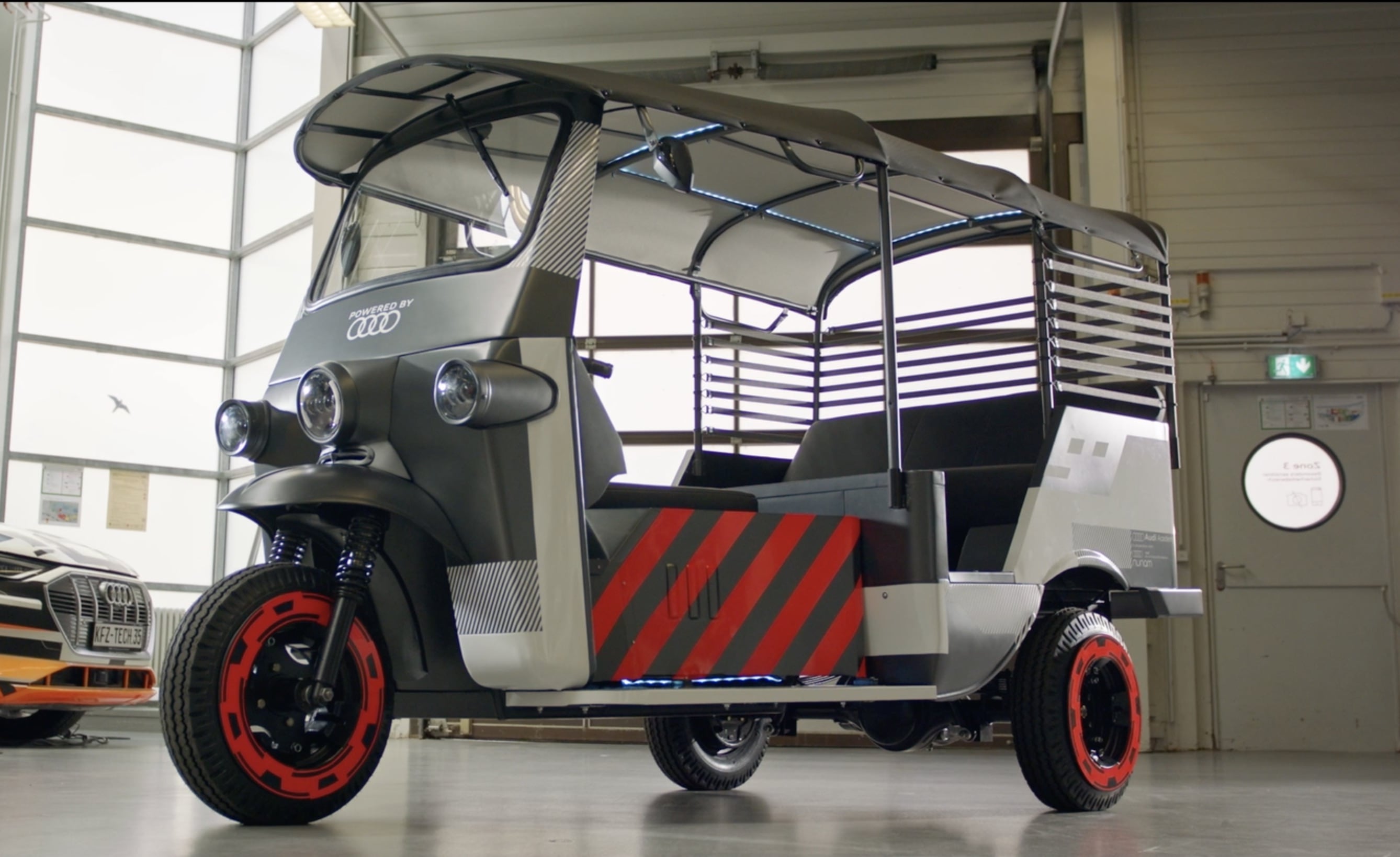
It is the first joint project involving AUDI AG, the Audi Environmental Foundation and Nunam, and the exhibit on display is the fully drivable show rickshaw, which was built for the GREENTECH FESTIVAL 2022 in Berlin.
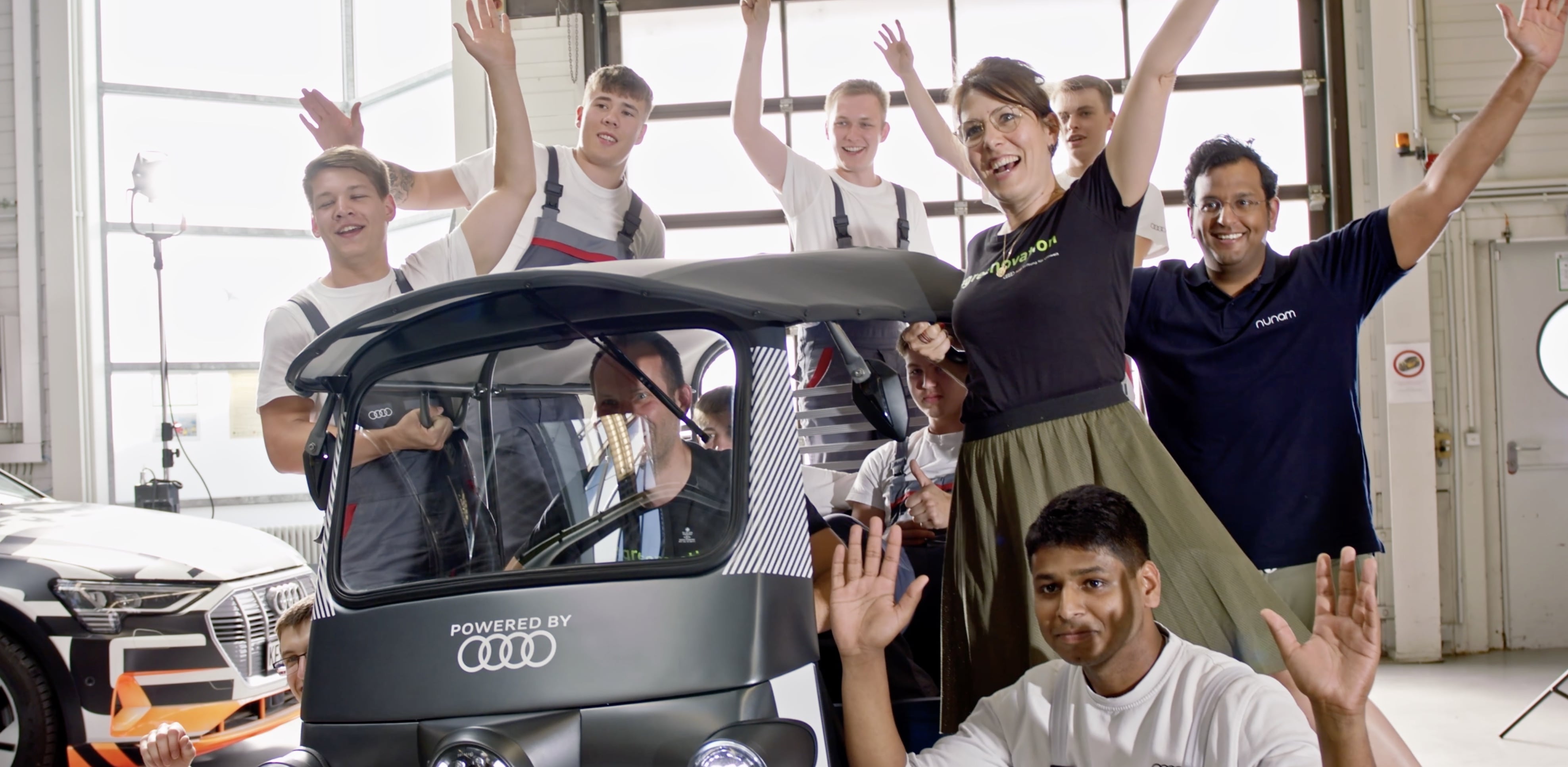
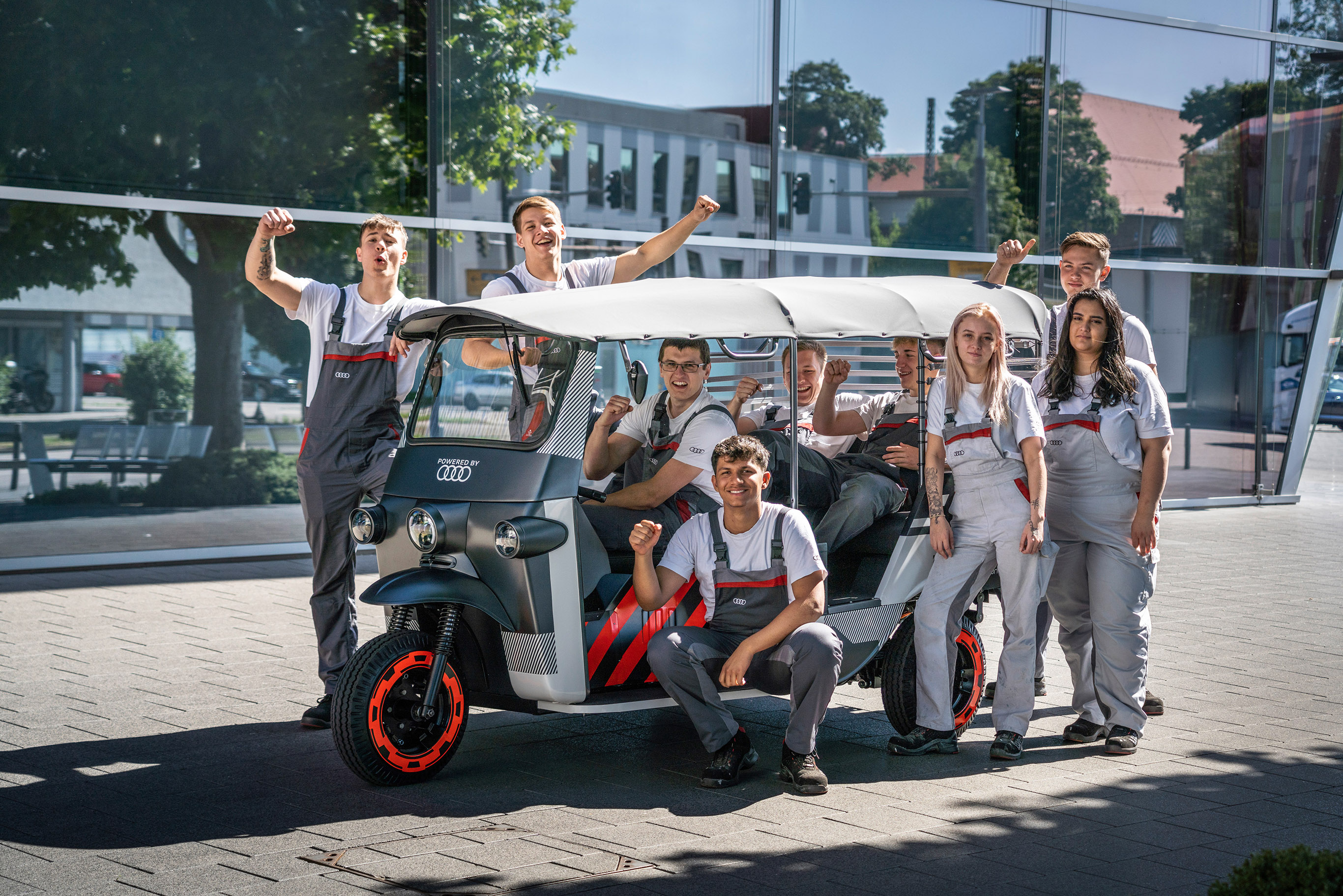
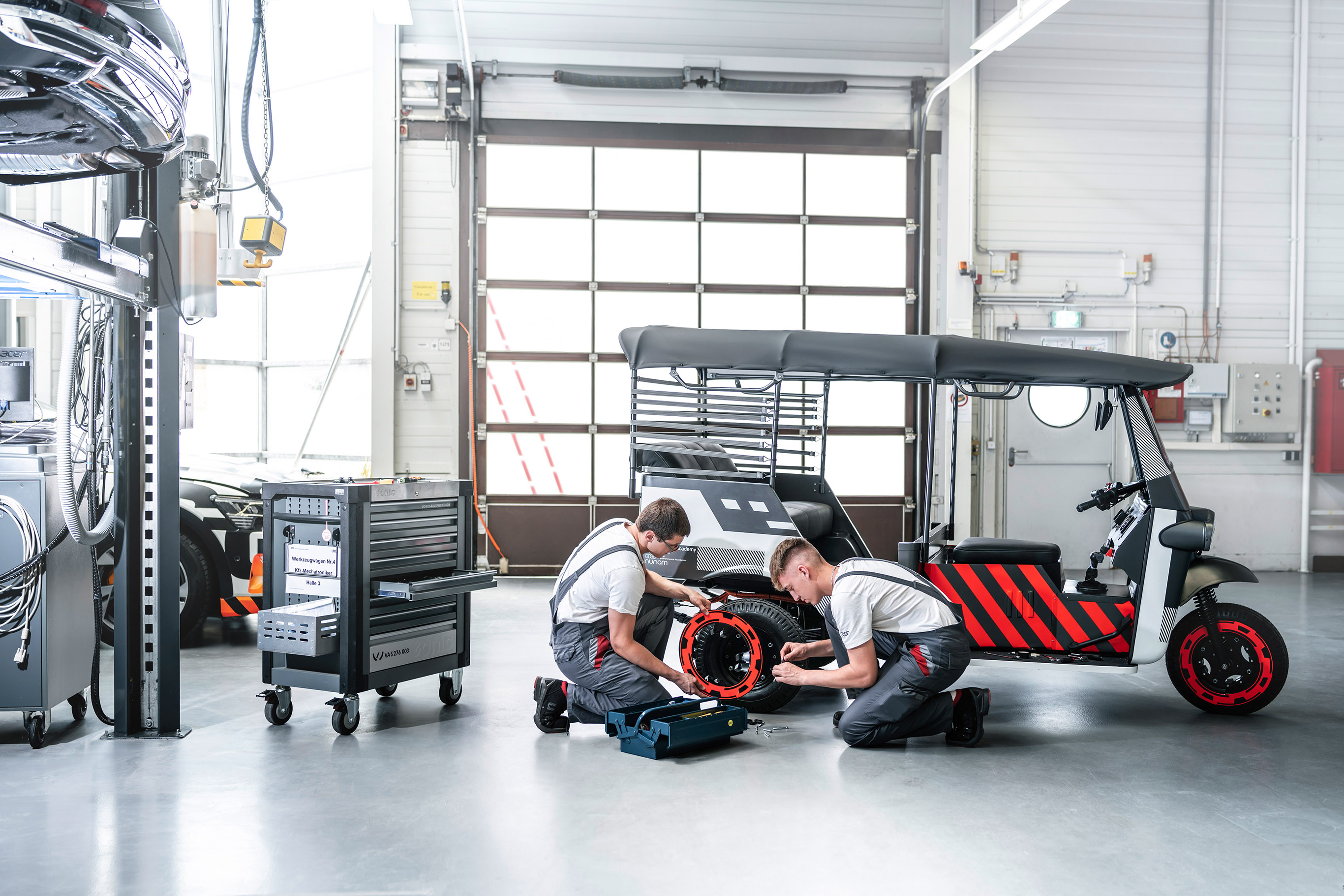
The trainees started work on the e-rickshaw at the Neckarsulm plant at the beginning of 2022, working on it for almost six months – a full-time job. The twelve-strong team of trainees under the guidance of Timo Engler, Head of Vehicle Technology / Logistics Training in Neckarsulm, played a key role in the development of the electric rickshaw. The trainees and the Nunam team were in constant dialogue with each other despite the great distance. They focussed on range, charging time and design in the construction – resulting in a rickshaw with Audi DNA. It was particularly important that the trainees were involved in the project from start to finish and were able to contribute and try out their own ideas. “Learning by doing” was the recipe for success – and at the same time, basic knowledge about the development activities of electric mobility, resource efficiency and charging technologies was imparted almost playfully and incidentally. It was a pioneering project because it combined the megatrends of sustainability, electromobility, internationalisation and social responsibility.
The trainees replaced the combustion engine with an electric drive. They designed the underbody in such a way that the four second-life batteries were protected from splash water and used as many recyclable materials as possible. The young professionals from the fields of automotive mechatronics for system and high-voltage technology, bodywork and vehicle construction mechanics, painting and tool mechanics built the vehicle together. Automation technicians and IT specialists took care of the charging station.
| Engine | Permanent magnet synchronous motor, 6 phases, aircooled | ||||||||
| Power | 3 kW (max. power output 6.4 kW) | ||||||||
| Torque | 11 Nm (max. torque 34.6 Nm) | ||||||||
| Transmission | Rear wheel drive, electric motor, two gear manual transmission | ||||||||
| Maximum speed | 48 km/h (29.83 mph) | ||||||||
| Acceleration | 21.63 sec from 0 – 45 km/h (27.96 mph) | ||||||||
| Dimensions |
|
||||||||
| Unladen weight | 516 kg (1137.6 lb) | ||||||||
| Wheels / tires | Two-piece steel rim 10’’, 5.00 – 10, with tubes | ||||||||
| Brakes | Hydraulic drumbrakes | ||||||||
| Chassis | Leaf springs |